29 May 2006

Firenze (Florence)

Finally found ourselves in the fabled Florence, the "flower" of Tuscany. Sadly it kind of smelt like a toilet, and was more like Naples than Rome. Still, it does have some of the best galleries and museums of which we managed to visit:

Brancacchi Chapel - Masaccio and Masolino's fresco cycle, unfortunately roped off and left in the dark because in anticipation of a religious ceremony that we reckon probably never took place.

Palazzo Medici Riccardi - home to the Medici family for 1,000 years it is also home to Benozzo Gozzoli's large fresco, The Adoration of the Magi.

Duomo - the famous church with its Brunelleschi dome looks much more impressive from outside. Inside the pickings are kind of slim, though there is a Vasari fresco and some stained glass by Ghiberti.

Campanile - Giotto's bell-tower stands beside the Dumo, and is decorated with sculptures by Andrea Pisano, Luca della Robbia and Donatello.

Baptistry - this has a wonderful medieval mosaic roof inside, but is more famous for its bronze doors, cast in bas-relief by Ghiberti. Called the "Gates of Paradise" by Michelangelo, and he'd know. There's also a set by Andrea Pisano, but noone cares.

Opera dell Duomo Museum - all the original sculptures from the Duomo, Campanile and Baptistry are kept here as well as other superlative works by Michelangelo (his final Pieta) and Donatello (St John and Mary Magdalene).

Ponte Vecchio - the oldest bridge in Florence, and home to the goldsmiths (since Duke Ferdinand I evicted the butchers in 1593). Anna saw a diamond watch for 160,000 Euros. :P

NZ WATCH: there was a boy waiting in line at the Academy with a silver fern sweatband, and a NZ school sports tour shirt on. Looked at me funny when I kept pointing out our kiwi. Foreigner or thicky? You decide!

Umbria


Drove right out of Tuscany today, into the rival region of Umbria (looks much the same, but don't tell the locals!). Found our way to Lake Trasimena, where Hannibal routed the Roman army for the second time. 25,000 Roman soldiers were killed and the rivers ran with blood for three days. Yikes! We had a nice pizza at Passignano.

Got a lucky park at MHTT Cortona and went to the Museo Diocesano with its two rooms of Signorellis and Fra Angelico's wonderful Annunciation (the angel has magnificent gold and red wings).

Tuscany Day 3

Lots of stops today! After breakfast, and another successful squirrel-spotting expedition, we drove to Volterra, another medieval hilltop town ("MHTT") famous for its albaster craftsmen. It was difficult to find a park due to the number of other tourists, so nerves were getting a bit frayed by the time we got settled in an underground lot. Fortunately we were able to bury ourselves in the excellent Etruscan collection at the admittedly somewhat moth-eaten Museo Etrusco Guarnacci. Prize piece was the enigmatic Ombra della Sera (Shadow of the Evening), a curiously elongated votive statuette that would look just at home in the Guggenheim.

Also stopped by:
  • Pinacoteca e Museo Civico for more Signorellis and Rosso Fiorentino's Mannerist masterpiece, The Deposition of Christ from the Cross;
  • Museo d'Arte Sacra, where they have placed all the worn-out items from the local churches; and
  • the local Roman theatre, one of the best preserved and dating back to the first century BC.

Last stop for the day, the MHTT of San Gimignano or "city of beautiful towers", as it has distinguished itself by building a number of large towers from which the locals waged war on each other. Anna and I went to the Collegiata, a 12th C Romaneque church with excellent frescoes everywhere. Old Testament scenes by Bartolo di Fredi, the life of Christ by Lippo Memmi and the life of St Fina by Ghirlandaio.

I also found time to check out the overpirced, but interesting, museum of Tortures and Witchcraft.

SORT-OF NZ WATCH: introduced myself to a guy in a Lion Red t-shirt. He was a German. :P

Food and Wildlife

A couple of new experiences for us, which I thought I'd share. You've already heard about our resident red squirrel, but we can also hear a genuine cuckoo hiding somewhere, and there are even fireflies at night. Fireflies are fascinating - there's enough light when they pulse that it even lights up the ground a little. I managed to catch one and have a look at it. They look quite ordinary, like a winged ant with a red head.

As with the rest of Italy, there are little lizards running around all over the place, and the usual humongous bee-things. We also had a terrifying creature in our shower the other day. Looked like one of the millipedes that ate Lumpy the Cook in King Kong.

On a more positive note, we've now tried peccarino - a sheep cheese. Yum!

North and South

Set out for Asciano, but Dad's GPS Navman system (we call her "Madam Lash") was taking us to Florence, so we diverted instead to Monteriggioni. This is a medieval hilltop town with views of the beautiful Tuscan countryside, and not a lot else.

Next stop, the abbey at Monte Oliveto Maggiore. This is a much more worthwhile place to visit, as the Great Cloister (built 1427) is decorated with excellent frescos by Luca Signorelli and "Il Sodoma" (the Sodomite). Sadoma's work is occasionally saucy - apparently in order to frustrate the monks with whom he had a falling out. There was also a medieval library and old apothecary.

Back and forth past Siena now to San Quirico d'Orcia, to see the Collegiate, an 8th C church with lion sculptures.

Final stop at the thermal baths of Bagno Vignoni, another medieval town with a natural sulphuric pool that has been used for medicinal purposes since Etruscan times. St Catherine and Lorenzo the Magnificent both came here for its curative powers. We had some drinkies (Jagermeister!) and soaked our feet.

Siena

Our first Tuscany trip was to Siena, on whose outskirts we are staying. It's a lovely quite medieval city - mostly flat, which will prove to be quite a contrast with the other towns in the region.

As usual, we made several church stops to check out all the medieval and Renaissance artworks. Our quota of ugly Madonna and Child paintings has gone through the roof!

Duomo - the main cathedral in Siena, decorated with sculptures by Nicola and Giovanni Pisano (a father and son team), Donatello's St John, frescoes by Pinturrichio and a mosaic by Perugino.

Battistero - the adjacent baptistery has an incomparable font, starring Donatello's peerless Feast of Herod, a brass bas-relief with pioneering achievements in perspective and a lot of action. There are also reliefs by Ghiberti, and more weather-beaten statues by Giovanni Pisaro.

Museo dell'Opera - houses an important Duccio collection, as well as works by Donatello, Nicola/Giovanni Pisano and Jacopo della Quercia. I still think Duccio is a little on the ugly side (green babies?), but his work is a lot more impressive in person.

Had a nice dip in the swiming pool - COLD!

24 May 2006

Under the Tuscan sun

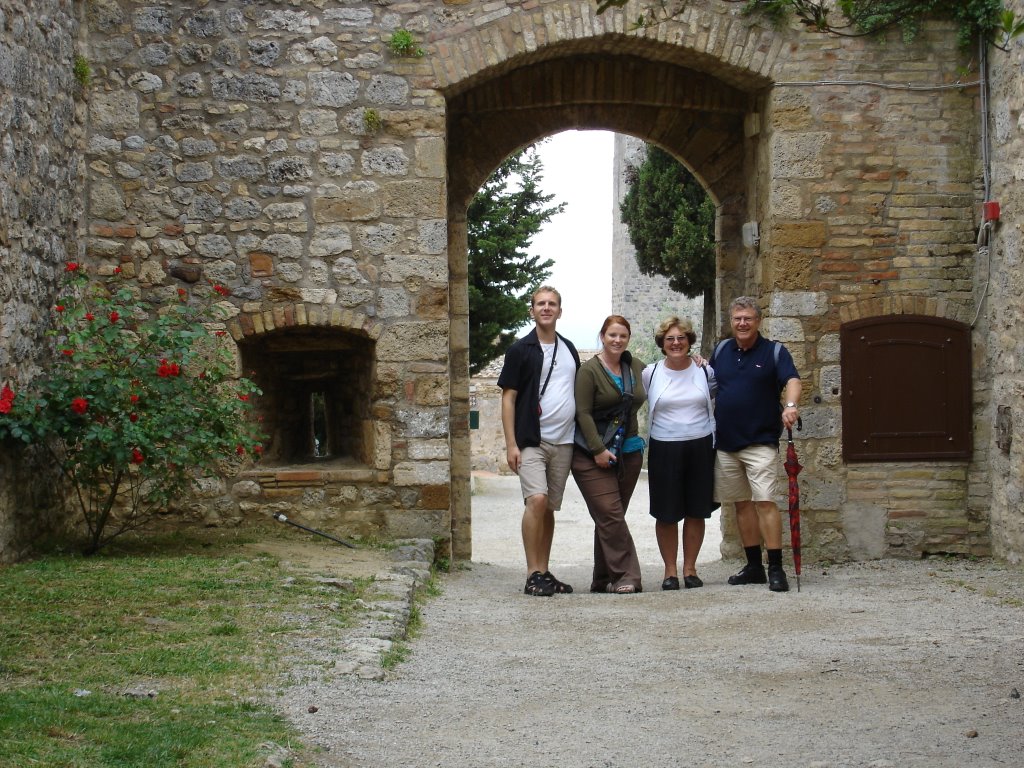
We have now met up with my Mum & Dad, and are staying on a beautiful olive farm in the Tuscany countryside near Siena. Internet access seems to be far and few between, so there will be less frequent blog updates for us to bore you with.

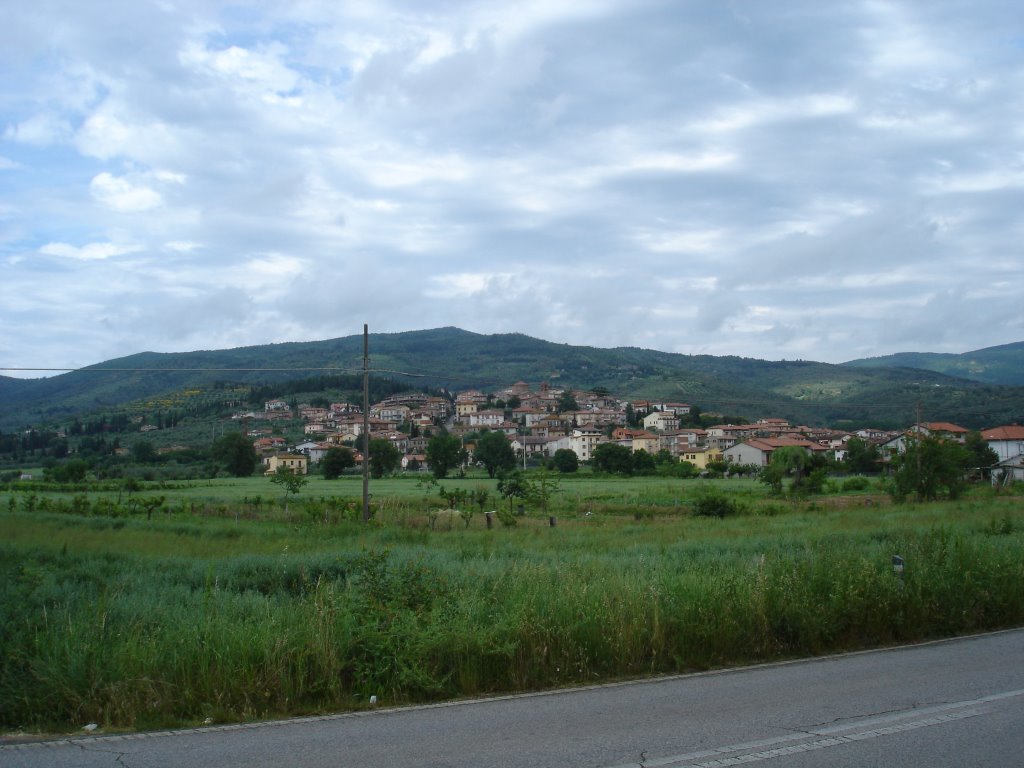
Tuscany is beautiful - very pastoral, but with big castles on every hill. They used to fight a lot here, when they should have been enjoying the sun instead!

SQUIRREL WATCH: our first Continental squirrel is a gorgeous little red baby, who flits between the trees outside our room. He moves very gracefully, like a blown feather. We have also heard a cuckoo, and have been hunting fireflies each night! Wheee...

19 May 2006

Religious Rome

By now I feel like we must have visited every church in Rome. This morning we knocked off the king of them all - St Peter's Basilica. I know I have been using terms of scale a lot recently, but this really is a monster - covering 23,000 suqare miles with a capacity for over 60,000 people. We came nice and early in the morning, so it was very quiet. However, we think the 60,000 people were in the Vatican Museum with us.

Like St Peter's, the museum is very large, covering an eclectic range of art and sculpture from ancient Egypt through to the Renaissance. Obviously most famous for the Sistine Chapel (Michelangelo's ceiling and altar-wall, but also with work by Botticelli and Perugino) it also boasts the finest works by Raphael (his Transfiguration and the Rafaella Stanza - rooms decorated by him), the famous ancient Laocoon sculpture (there's a copy in the Auckland War Memorial Museum) and a hoard of others (Giotto, Masolino, Fra Filippo Lippi, Caravaggio, Titian and Carracci). Phew!

To recover, we took a nice long stroll alongside the River Tiber to some lesser-known, but excellent, sites in the Trastevere quarter. Here we admired the mosaics in the Basilica di Santa Maria in Trastevere, sat by the remains of the Boario Forum (Vesta's Temple, the Arch of Janus and the Tempio della Fortuna Virile) and put our hands into the mouthpiece of the famous La Bocca della Verità statue - it chomps your hand off if you lie!

Last stop for the day was the Jewish Museum, which recounted the history of persecution by the Catholic Church, and otherwise contained some lovely items recovered from the Jewish ghetto. We also got to look inside a couple of synagogues, which made a nice change for me.

Hmmm - what flavour gelati shall we have tonight?

18 May 2006

Roma 4

Oh dear, we seem to be getting up later and later each day. Part of the problem with sleeping in a converted wine cellar is the lack of natural light - makes it easier to sleep in! We will have to be extra vigilant tomorrow morning so that we can get a good start on the Vatican Museum - it has terrifiying queues. I mean worse than Disneyland rides.

So... today was another museum extravaganza. We spent most of it at the Capitoline Museums, which have expanded considerably since I was last here. The museum is split over three buildings sitting atop the Capitoline Hill, behind Il Vittoriano, and overlooking the ancient Roman Forum. Michelangelo designed a nice sloping staircase up to the site, where visitors are greeted by the mammoth statue of Marcus Aurelius astride a horse.

The museum's collection has been built by donations, many from past Popes, and boasts several masterpieces including:

  • She-wolf suckling Romulus and Remus - you'll have seen this before, but you not know that although the she-wolf is classical, the infants are 15th C additions.
  • Marcus Aurelius - there is now a replica outside, with the original housed in a new glass atrium.
  • Emperor Commodus as Hercules - one of Rome's insane Emperors, depicted as Hercules. He liked to dress up as Hercules and 'fight' unarmed quadriplegics in the Colosseum. He usually won. Was played by Joaquin Phoenix in the film "Gladiator".
  • Dying Gaul - the famous statue of the Gaulish warrior (identifiable by moustache and the torque around his neck) collapsing onto his shield.
  • Constantine - super-mammoth statue of the Emperor. The only remainders are his head, hand and feet.
  • Bernini's Medusa head

We then nipped over to the Capuchin cemetary beneath Chiesa si Santa Maria della Concezione. It's not really a cemetary - it's a series of chapels adorned with the remains of 4,000 monks. Their bones pattern the walls and, um, even the light fittings. Ick!

After this grisly scene, we ducked back into another museum. Unfortunately, not the one we were after. We ended up in the Piazza Venezia gallery instead of the Pamphilj collection. It was still interesting though, and had some interesting medieval helmets and some naughty bronzes.

We also finally ascended the Il Vittoriano war memorial and took in the views. Hooray!

NZ WATCH: turned on the telly and caught the NZ episode of "The Amazing Race" - overdubbed in Italiano!

17 May 2006

Anna in Rome

NB: I have pinched this from an email Anna wrote to her folks. I think it adds some nice colour to my drab description of our last three days. Enjoy!

The touring is going well. We are in Rome now - and it's more enjoyable than Naples because you can walk around without having to dodge cars and motorbikes. The Romans have made it illegal to drive in the historic areas of the city - yay.

The only negative thing about Rome compared to Naples is the food. We now realise just how good the food was in Naples - and cheap - and plentiful. Oh well, you can't have everything.

Yesterday we went to the Colosseum, which was pretty amazing. It actually looks more spectacular when viewed from a distance. The three levels of arches are quite beautful and striking. Each level uses a different type of column capital - Doric, Ionic and Corinthian. From inside I thought it felt kind of small - although when you went to the top level and looked down it did feel very high. I guess we've seen so many amazing constructions now its getting harder to be really impressed.

It's also difficult to imagine all the bloodthirsty things that went on there. When it first opened they had games that went on for something like a hundred days, and thousands of animals were killed for sport - including exotic animals like lions and tigers. They were also able to flood the arena and have mock naval battles. I'm not sure about the Colosseum, but in other Roman arenas such as the one in Siracuse (Sicily), they also fought crocodiles in the pools.

It's very warm here. I'm not sure how warm but possibly 26 degrees. It's the hottest its been our entire holiday. Yesterday the heat totally wiped us out and we ended up lying under a tree on the Palatine Hill. This is a kind of a parky area full of ruins, where the well-to-do built their houses. Later the Emperors built here too, over the top of the other houses.

Roma 3

I know lists are boring, but this is for our record as much as it is for your information. Just enjoy the pictures if you don't want to read anything :)

Palazzo Massimo Alle Terme - Rome's main archaeological museum, it has a great collection of statuary and mosaics/frescoes. The most impressive is an entire chambre with frescoes of a summer garden, built by Augustus for his wife Livia. Several types of trees and specimens of bird are identifiable (including a quince tree, for those of you with a runcible spoon).

Terme di Diocleziano - built on the ruins of a large bath complex, this is another outstanding museum. It has a collection of epigrammtic carvings - which may not sound interesting, but actually provide a lot of information about how the Romans dealt with their slaves, funerary rites, business etc. Notable for a new section devoted to Rome's prehistory.

Pazlazzo Altemps - kind of a poor cousin to the others, this is a museum built from a private collection. Lots of intersting statues (as always, Roman marble copies of Greek bronze originals) but all with out-of-place 18th C restorations (eg new heads, new noses etc)

Roma 2

Piazza Bernini - two Bernini fountains

The Spanish Steps - famous flirting ground for Italian youths, these were actually built by the French. We also traipsed around Via Condotti, home to the Cartier etc shopping district. Anna was disappointed that Cartier was closed. I was okay with it.

Trevi Fountain - another Bernini fountain, immortalised by Fellini's film "La Dolce Vita". We both threw coins into the fountain (over our shoulders), a ritual that ensures we will return to Rome!

Palatine Hill - where the wealthiest Romans, and the Emperors, built their palaces. Overlooks the Circus Maximus, now a dirty looking field.

Colosseum - you know, where that Russell Crowe film was set.

Teatro Marcello - theatre built by Augustus for his sister, Octavia.

Piazza Farnese - two large fountains, made with monumental bath tubs from the Baths of Caracalla (also in Rome).

16 May 2006

Roma 1

We are safe and sound in Rome, and keeping ourselves busy with all the many brilliant things Rome has to offer. Weather is beautiful (HOT!), we have a lovely apartment and all is well (though the food is strangely poor so far - Naples had much better pizza). Our days have mostly consisted of big walkabouts, with visits to several key sites per day. Our hitlist thus far:

Piazza Navona - Bernini's fountain and Boromini's facade

Chiesa di Sant Agostini - ornate church with a Raphael fresco and a Caravaggio

Chiesa di San Luigi dei Francesi - more Caravaggios

Pantheon - the crowning achievement of Roman architectural engineering, this was a temple to 'all gods' with a dome built to contain a perfect sphere. So magnificent, even the Christians couldn't bring themselves to destroy it, and so converted it into a church. Raphael is buried here.

Ara Pacis Augustae - finally open after years of restoration work, this is one of the key items from my old Classics classes (hi Mr Kirby!). A sacrificial altar built by the Emperor Augustus to celebrate the peace he had brought to an Empire torn by civil war.

Mausoleo Augusto - Augustus' tomb, near the Ara Pacis. Now a toilet for homeless people.

Piazza Venezia & Il Vittoriano - a great war memorial palace, but it's been closed for a civic ceremony each time we've stopped by. Ahrg!

Trajan's Column - built to commemmorate Trajan's military conquests, it is engraved with a spiralling bas-relief cartoon. This used to be in a courtyard, and thus readable. Now it stands alone, and can only be admired from a distance - alas! Nearby are the ruins of Trajan's Markets (currently closed for restoration), Trajan's Forum, The Forum of Augustus and The Forum of Nerva.

Roman Forum - the commercial and political centre of ancient Rome, now ruins.

The Arch of Titus - built by the titular Emperor to celebrate his defeat of the Hebrews. Well, I'm here and he's not.

The Time Elevator - an awesome "motion-master" ride that takes you through the history of Rome. Surprisingly well put-together actually.

Chiesa di Santa Maria Sopra Minerva - church with works by Michelangelo and Filippino Lippi.
Largo Argentina - dug as a foundation to a new building, the ruins of three temples were discovered here, and building halted. All the cats of Rome seem to congregate here, on the ruins.

13 May 2006

All roads lead to Rome

Spent our last morning in Naples with a visit to the waterfront Castel dell Ovo - Castle of the Egg. Virgil was supposed to have buried an egg here, and as long as the egg remains whole, the castle remains standing.

Next stop - Roma!

Capodimonte

We finally made it inside the Capidomonte art gallery today, and it was worth pursuing as there is currently a wonderful Tiziano (Titian) exhibition. There were lots of pleasant surprises such as unexpected works by Botticelli, Michelangelo and Raphael, and we were able to sneak inside a couple of 'officially' closed areas (the modern art gallery, and the collection of prints and sketches).

The gallery also had work by El Greco, Ghirlandaio, Parmigianino, Masolino, Masaccio (Aran - they had the Crucifixion we studied!), Simone Martini, Caravaggio, Tintoretto, Giorgio Vasari (author of the Lives of the Artists and artist himself) and Filippino Lippi.

We had big plans for the afternoon, but ended up having a big snooze instead!

Death Race 2000

Yeeha! Hair-raising, knuckle-whitening fun as we rent a car (Fiat of course) and head out for the a day in the countryside.

After adding an extra half an hour to our journey by missing the proper autostrada entrance (there was a 1 in 3 chance) we made up the time on the A3 motorway to Paestum. There are max speed limits posted throughout, but these are typically exceeded by an extra 50% by Neapolitans.

Paestum is an ancient Greek colony, south of Salerno (itself an hour south of Naples), with the most complete surviving temples in the world. Although there was nothing essentially new for us to see, the site did add to our picture of the ancient world, and the site museum was excellent. It looked small from outside, but was rather like the Tardis inside. It had a collection of tomb frescoes (from the grave interiors!), something we hadn't really encountered anywhere before.

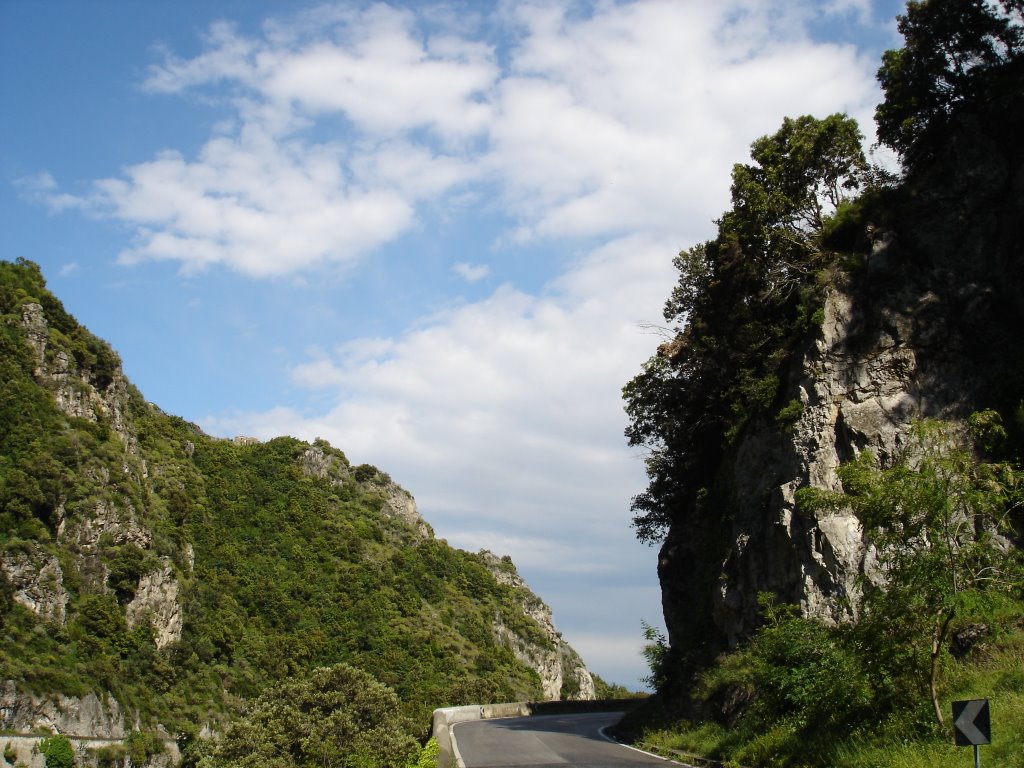
After Paestum we took a 'leisurely' drive around the Amalfi coast. I was glad that Anna was wearing her St Christopher, because the roads in this area are insane. It's like an extremely narrow and winding version of the worst parts of our coastal or gorge roads, coupled with excessively fast locals and tour buses that don't fit. Wow. We are still amazed that we got through the whole length of coast without scraping the car.

Words can't really describe how beautiful this area is. Suffice to say it's the most like New Zealand that we've yet seen - high praise that this is. Sheer cliffs covered in terraced lemon orchards and tiny villages, suspended above clear blue sea. Lovely - only don't try to stop for a coffee!

Amalfi itinerary: Salerno - Vieti sul Mare - Cetara - Maiori - Atrani - Amalfi - Praiano - Positano - Sorrento

11 May 2006

Nasty Naples

To be fair, there are pluses and minuses to everywhere we've been so far, but a particularly bad spell of luck is causing Naples' deficit sheet to mount. We spent the morning on a crowded bus vainly searching for an art gallery on the top of a hill. We seem to have exited at the wrong stop, and went searching for what looked like the right place. However, after trudging through smelly tunnels and staircases strewn with used hypodermics, we found we were in the wrong place. The gallery had been nearby our initial stop, only hidden from view. All this and a pigeon got splattered on the road right in front of us. Icky icky icky.

Eventually we found the gallery, but hey, it's closed on Wednesdays. :P

The afternoon fared a little better at least. We had a nice revivifying lunch (pizza and beer) and set out for some smaller sights in (again) the historical centre. First up was the Museo Cappella Sansevero, home to the splendid marble "Veiled Christ". This masterful work appears to be a person under a translucent silk sheet - it's eerily effective. There was also an ironically sensual personification of "Chastity", and a man struggling under a net that was superbly realised.

Next up was the Cathedral Duomo (again). This time, however, we stopped by the museum which is full of San Gennaro's treasures, and the archaeological zone - a series of excavations beneath the cathedral. Very interesting; the usual Greek and Roman stuff and mosaics.

Anna has also reminded me of several other positives:
  • we met a friendly guy at the Kodak shop, who pointed us to some interesting sights
  • I got a decent cheap haircut without having to wait around
  • the pizza and beer is a w e s o m e
  • the city is not as crime-ridden as we were lead to believe
These may sound trivial, but they make a difference after a hectic day.

Jupiter's wrath

Starting at the end of the day for a change... We were walking around the historical centre (again, it seems like we're always in it! But that's okay) when the skies began to darken ominously. Lo and behold, the expected deluge began and we had to take shelter in a shop doorway. It was quite interesting watching other people go past with and without umbrellas (ombrellini), and seeing the shopkeeper's hastily covering the goods they had set up outside. The rain became heavier, so we sheltered in the internal courtyard of a nearby apartment building. We were sitting there, waiting, when an enormous thunderclap broke right on top of us. It was so loud you could feel it through your body, and all the car alarms went off . However, this was nothing compared to the flash of a lightning bolt striking the centre of the courtyard about 20 feet away from us! Holy cow. I spent the next several minutes jumping around whooping with delight. Poor Anna, but it was pretty wicked.

Anyway, today's visits included:

The Duomo Cathedral - an impressive cathedral, sanctified in the name of Saint Gennaro. We were lucky enough to witness the miracle of the liquifying blood; that is, the cathedral has a couple of phials of the Saint's congealed blood, which magically liquify once a year. It's a miracle! And we saw it!

Castel Nuovo - a slightly underwhelming castle, but with impressive views and a nice, if small, collection of art.

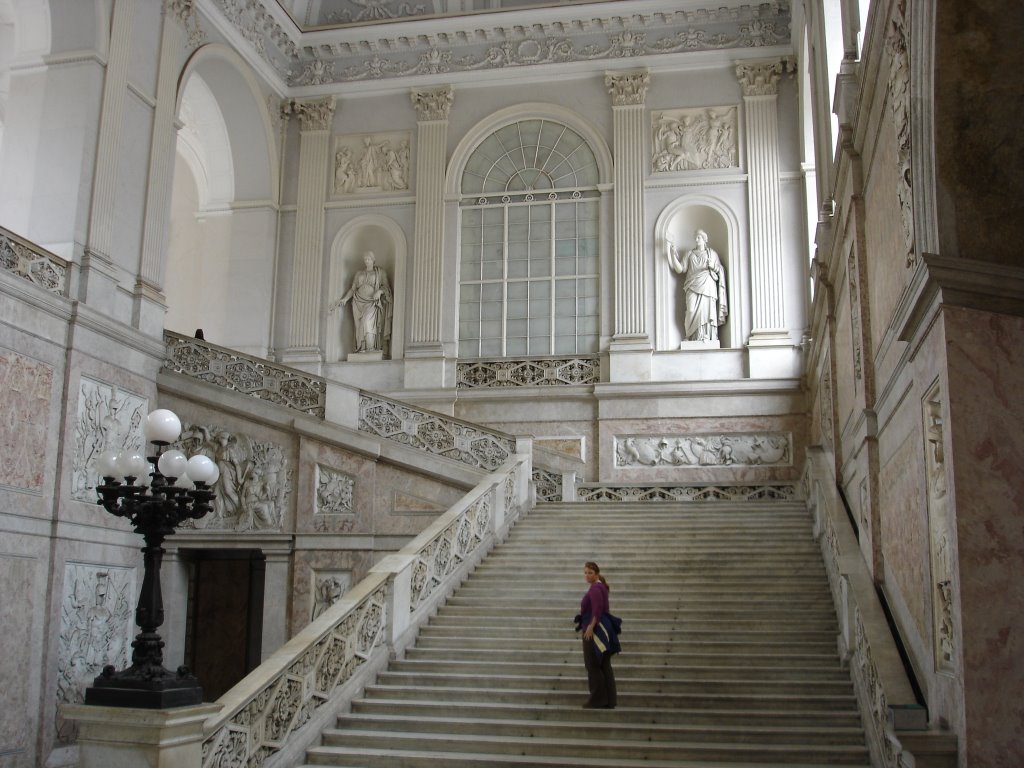
Piazza Reale - an opulent palace, which was curiously deserted when we looked through it. Was quite nice to have the run of the place - we could pretend it was ours.

Umberto Shopping Gallery - looks like something out of the film Metropolis, crossed with the Musee d'Orsay. This place is infamous for the attentions of its resident gypsy children. I had a cute lil tyke fixate on me at the entrance, but it was more like a fun game of 'tiggy' than anything to worry about. Awww.

09 May 2006

In the shadow of Mt Vesuvius


Holy moley, Pompeii is seriously huge. It's some 66 hectares of Roman city laid out in a large semi-rectangular shape, which was buried by the eruption of Mt Vesuvius in 79AD. Following the excavations, you can now walk around the largely preserved city and get a sense of what it was like to live in those, comparatively modern, times.

There are cobbled streets, with ruts formed by the chariot wheels. There are street hoardings, 'for rent' notices, graffiti and water fountains. There are small food shops that look like Asian fast food joints. You can walk into houses and see them almost as they were, with the invidual rooms complete with floor mosaics and painted walls. We explored public baths, patrician villas (large holiday homes outside the city walls), temples, the local government buildings, a brothel, necropoli (graveyards), theatre complexes (with atrium and galdiator's barracks) and the massive stadium and nearby exercise yard.

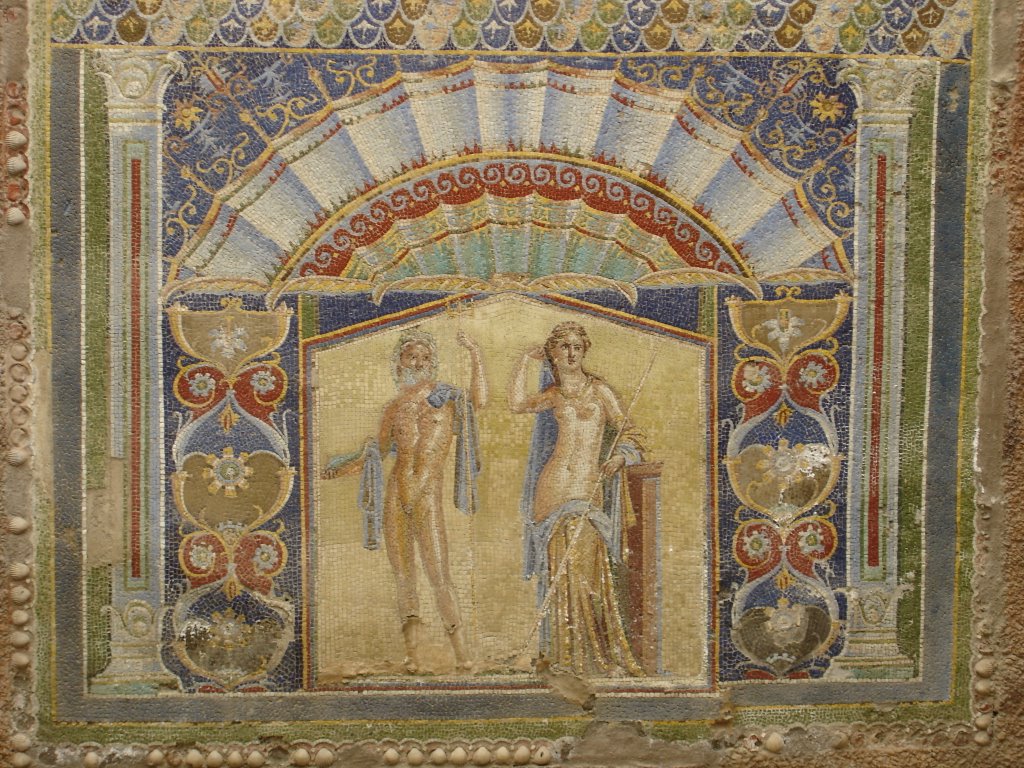
After many hours here, we caught a train to Herculaneum. This was more of a seaside resort and, thanks to the mud that filled it (Pompeii was hit by pumice rocks and ash), is even better preserved than Pompeii.

Herculaneum is set well below the street level of modern Ercolano (from all accounts, a bit of a slum). It is set in a massive recessed pit, which you reach either by tunnel or bridge. Here there are more complete mosaics in situ, and there are lovely gardens that have been replanted. It is a useful companion site to Pompeii - and if you only had a little time, would probably be a sufficient visit. Kind of like Pompeii's finest compressed into a small site, though it doesn't give the sense of scale.

A long day for us, so back to Naples for more exquisite pizza and beer!

08 May 2006

Napoli

Naples has a similar vibe to the Sicilian cities, but to the Nth degree - faster, noisier, more crowded. You can't take a few steps without hitting a motorbike, and every church has several resident beggars. These are usually a woman with a baby (maybe not always a real baby!), but as often as not, these might be ordinary looking, well-dressed people with their hands out. To date we've even seen a girl in new jeans with highlights in her hair, kneeling by the side of the road. Go figure!

Anna wanted me to mention that many of the streets are alleyways not even as wide as the pavements back home. There are scores of churches down each of these, many stories high with impressive monumental facades. Unfortunately you can't get back far enough from these to really take them in. Naples is actually very competitive when it comes to ornate interiors (I'm looking at you Gesu Nuovo cathedral!) but from outside these magnificent buildings look like they're crumbling away. There is also a lot of graffitti on them - can you imagine! Someone even had the nerve to spraypaint on the statue of Dante. Quite sad.

Anyway, we had a bit of an orienteering day:

Gesu Nuovo - 16th C baroque Jesuit church. Ornate overdrive!

S. Chiara - 14th C medieval church, restored following Allied bombings.

Piazza Dante - the eponymous author's statue and piazza square.

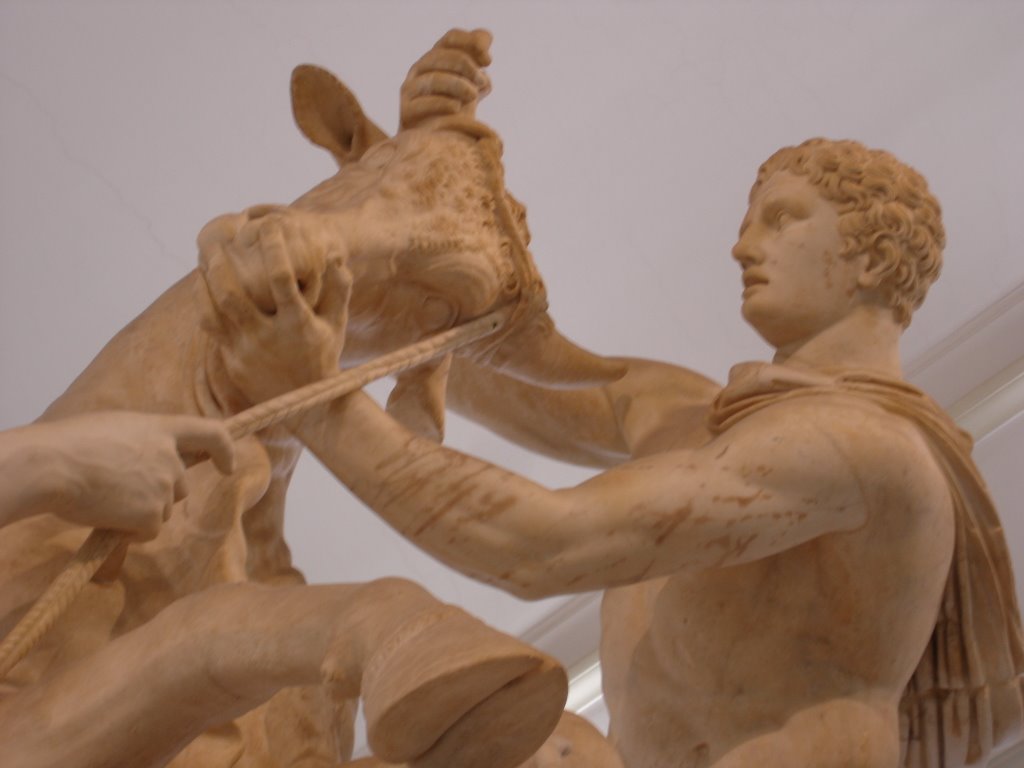
National Archaeological Museum - like a mini-Louvre, this museum is mostly famous for housing the treasure troves and mosaics/frescoes from Poempeii. Rightfully so, as these items are truly magnificent. The detail on the miniature mosaics is staggering, so fine as to appear like a painting. There are also many world-class Roman sculptures, such as many of the various emperors, but also giant figures from the Baths of Caracella in Rome. The greatest of these are the mammoth overwrought Hercules, and the multi-figured Farnese Bull. The latter depicts two men struggling with a large bull, as a woman cowers beneath. (In mythology, she is then tied to the underside of the bull to be killed. Grisly!)

NZ WATCH: an expat recognised our kiwi at the museum. She is now living in Australia (tsk tsk).