17 May 2006

Roma 3

I know lists are boring, but this is for our record as much as it is for your information. Just enjoy the pictures if you don't want to read anything :)

Palazzo Massimo Alle Terme - Rome's main archaeological museum, it has a great collection of statuary and mosaics/frescoes. The most impressive is an entire chambre with frescoes of a summer garden, built by Augustus for his wife Livia. Several types of trees and specimens of bird are identifiable (including a quince tree, for those of you with a runcible spoon).

Terme di Diocleziano - built on the ruins of a large bath complex, this is another outstanding museum. It has a collection of epigrammtic carvings - which may not sound interesting, but actually provide a lot of information about how the Romans dealt with their slaves, funerary rites, business etc. Notable for a new section devoted to Rome's prehistory.

Pazlazzo Altemps - kind of a poor cousin to the others, this is a museum built from a private collection. Lots of intersting statues (as always, Roman marble copies of Greek bronze originals) but all with out-of-place 18th C restorations (eg new heads, new noses etc)

Roma 2

Piazza Bernini - two Bernini fountains

The Spanish Steps - famous flirting ground for Italian youths, these were actually built by the French. We also traipsed around Via Condotti, home to the Cartier etc shopping district. Anna was disappointed that Cartier was closed. I was okay with it.

Trevi Fountain - another Bernini fountain, immortalised by Fellini's film "La Dolce Vita". We both threw coins into the fountain (over our shoulders), a ritual that ensures we will return to Rome!

Palatine Hill - where the wealthiest Romans, and the Emperors, built their palaces. Overlooks the Circus Maximus, now a dirty looking field.

Colosseum - you know, where that Russell Crowe film was set.

Teatro Marcello - theatre built by Augustus for his sister, Octavia.

Piazza Farnese - two large fountains, made with monumental bath tubs from the Baths of Caracalla (also in Rome).

16 May 2006

Roma 1

We are safe and sound in Rome, and keeping ourselves busy with all the many brilliant things Rome has to offer. Weather is beautiful (HOT!), we have a lovely apartment and all is well (though the food is strangely poor so far - Naples had much better pizza). Our days have mostly consisted of big walkabouts, with visits to several key sites per day. Our hitlist thus far:

Piazza Navona - Bernini's fountain and Boromini's facade

Chiesa di Sant Agostini - ornate church with a Raphael fresco and a Caravaggio

Chiesa di San Luigi dei Francesi - more Caravaggios

Pantheon - the crowning achievement of Roman architectural engineering, this was a temple to 'all gods' with a dome built to contain a perfect sphere. So magnificent, even the Christians couldn't bring themselves to destroy it, and so converted it into a church. Raphael is buried here.

Ara Pacis Augustae - finally open after years of restoration work, this is one of the key items from my old Classics classes (hi Mr Kirby!). A sacrificial altar built by the Emperor Augustus to celebrate the peace he had brought to an Empire torn by civil war.

Mausoleo Augusto - Augustus' tomb, near the Ara Pacis. Now a toilet for homeless people.

Piazza Venezia & Il Vittoriano - a great war memorial palace, but it's been closed for a civic ceremony each time we've stopped by. Ahrg!

Trajan's Column - built to commemmorate Trajan's military conquests, it is engraved with a spiralling bas-relief cartoon. This used to be in a courtyard, and thus readable. Now it stands alone, and can only be admired from a distance - alas! Nearby are the ruins of Trajan's Markets (currently closed for restoration), Trajan's Forum, The Forum of Augustus and The Forum of Nerva.

Roman Forum - the commercial and political centre of ancient Rome, now ruins.

The Arch of Titus - built by the titular Emperor to celebrate his defeat of the Hebrews. Well, I'm here and he's not.

The Time Elevator - an awesome "motion-master" ride that takes you through the history of Rome. Surprisingly well put-together actually.

Chiesa di Santa Maria Sopra Minerva - church with works by Michelangelo and Filippino Lippi.
Largo Argentina - dug as a foundation to a new building, the ruins of three temples were discovered here, and building halted. All the cats of Rome seem to congregate here, on the ruins.

13 May 2006

All roads lead to Rome

Spent our last morning in Naples with a visit to the waterfront Castel dell Ovo - Castle of the Egg. Virgil was supposed to have buried an egg here, and as long as the egg remains whole, the castle remains standing.

Next stop - Roma!

Capodimonte

We finally made it inside the Capidomonte art gallery today, and it was worth pursuing as there is currently a wonderful Tiziano (Titian) exhibition. There were lots of pleasant surprises such as unexpected works by Botticelli, Michelangelo and Raphael, and we were able to sneak inside a couple of 'officially' closed areas (the modern art gallery, and the collection of prints and sketches).

The gallery also had work by El Greco, Ghirlandaio, Parmigianino, Masolino, Masaccio (Aran - they had the Crucifixion we studied!), Simone Martini, Caravaggio, Tintoretto, Giorgio Vasari (author of the Lives of the Artists and artist himself) and Filippino Lippi.

We had big plans for the afternoon, but ended up having a big snooze instead!

Death Race 2000

Yeeha! Hair-raising, knuckle-whitening fun as we rent a car (Fiat of course) and head out for the a day in the countryside.

After adding an extra half an hour to our journey by missing the proper autostrada entrance (there was a 1 in 3 chance) we made up the time on the A3 motorway to Paestum. There are max speed limits posted throughout, but these are typically exceeded by an extra 50% by Neapolitans.

Paestum is an ancient Greek colony, south of Salerno (itself an hour south of Naples), with the most complete surviving temples in the world. Although there was nothing essentially new for us to see, the site did add to our picture of the ancient world, and the site museum was excellent. It looked small from outside, but was rather like the Tardis inside. It had a collection of tomb frescoes (from the grave interiors!), something we hadn't really encountered anywhere before.

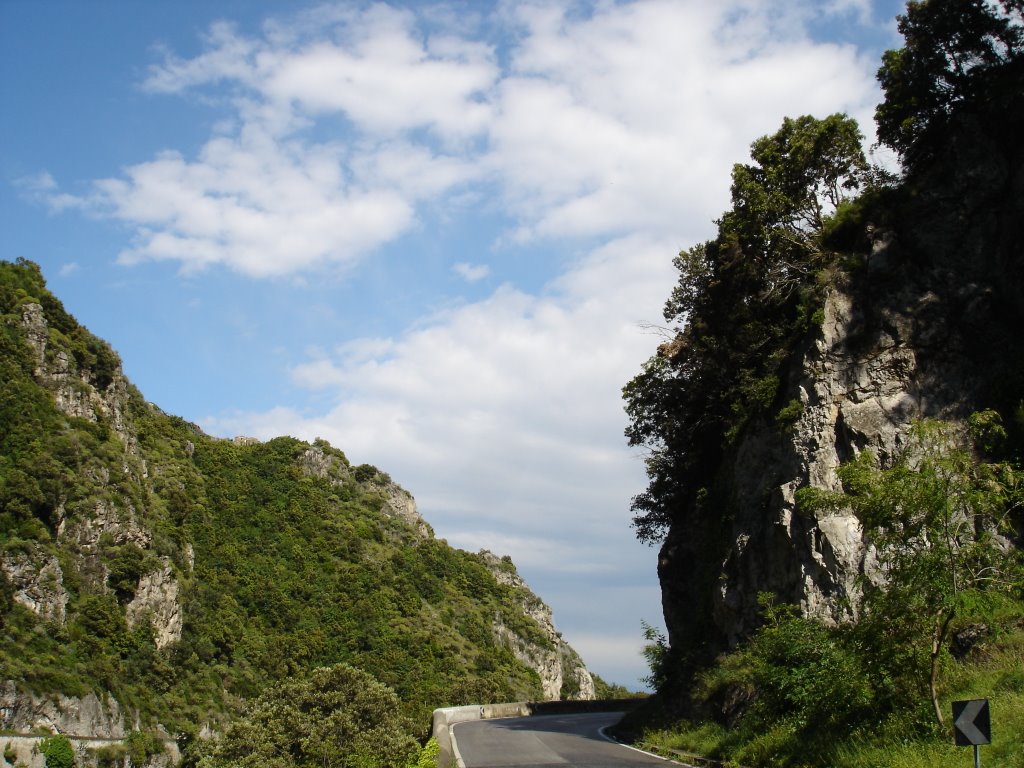
After Paestum we took a 'leisurely' drive around the Amalfi coast. I was glad that Anna was wearing her St Christopher, because the roads in this area are insane. It's like an extremely narrow and winding version of the worst parts of our coastal or gorge roads, coupled with excessively fast locals and tour buses that don't fit. Wow. We are still amazed that we got through the whole length of coast without scraping the car.

Words can't really describe how beautiful this area is. Suffice to say it's the most like New Zealand that we've yet seen - high praise that this is. Sheer cliffs covered in terraced lemon orchards and tiny villages, suspended above clear blue sea. Lovely - only don't try to stop for a coffee!

Amalfi itinerary: Salerno - Vieti sul Mare - Cetara - Maiori - Atrani - Amalfi - Praiano - Positano - Sorrento

11 May 2006

Nasty Naples

To be fair, there are pluses and minuses to everywhere we've been so far, but a particularly bad spell of luck is causing Naples' deficit sheet to mount. We spent the morning on a crowded bus vainly searching for an art gallery on the top of a hill. We seem to have exited at the wrong stop, and went searching for what looked like the right place. However, after trudging through smelly tunnels and staircases strewn with used hypodermics, we found we were in the wrong place. The gallery had been nearby our initial stop, only hidden from view. All this and a pigeon got splattered on the road right in front of us. Icky icky icky.

Eventually we found the gallery, but hey, it's closed on Wednesdays. :P

The afternoon fared a little better at least. We had a nice revivifying lunch (pizza and beer) and set out for some smaller sights in (again) the historical centre. First up was the Museo Cappella Sansevero, home to the splendid marble "Veiled Christ". This masterful work appears to be a person under a translucent silk sheet - it's eerily effective. There was also an ironically sensual personification of "Chastity", and a man struggling under a net that was superbly realised.

Next up was the Cathedral Duomo (again). This time, however, we stopped by the museum which is full of San Gennaro's treasures, and the archaeological zone - a series of excavations beneath the cathedral. Very interesting; the usual Greek and Roman stuff and mosaics.

Anna has also reminded me of several other positives:
  • we met a friendly guy at the Kodak shop, who pointed us to some interesting sights
  • I got a decent cheap haircut without having to wait around
  • the pizza and beer is a w e s o m e
  • the city is not as crime-ridden as we were lead to believe
These may sound trivial, but they make a difference after a hectic day.

Jupiter's wrath

Starting at the end of the day for a change... We were walking around the historical centre (again, it seems like we're always in it! But that's okay) when the skies began to darken ominously. Lo and behold, the expected deluge began and we had to take shelter in a shop doorway. It was quite interesting watching other people go past with and without umbrellas (ombrellini), and seeing the shopkeeper's hastily covering the goods they had set up outside. The rain became heavier, so we sheltered in the internal courtyard of a nearby apartment building. We were sitting there, waiting, when an enormous thunderclap broke right on top of us. It was so loud you could feel it through your body, and all the car alarms went off . However, this was nothing compared to the flash of a lightning bolt striking the centre of the courtyard about 20 feet away from us! Holy cow. I spent the next several minutes jumping around whooping with delight. Poor Anna, but it was pretty wicked.

Anyway, today's visits included:

The Duomo Cathedral - an impressive cathedral, sanctified in the name of Saint Gennaro. We were lucky enough to witness the miracle of the liquifying blood; that is, the cathedral has a couple of phials of the Saint's congealed blood, which magically liquify once a year. It's a miracle! And we saw it!

Castel Nuovo - a slightly underwhelming castle, but with impressive views and a nice, if small, collection of art.

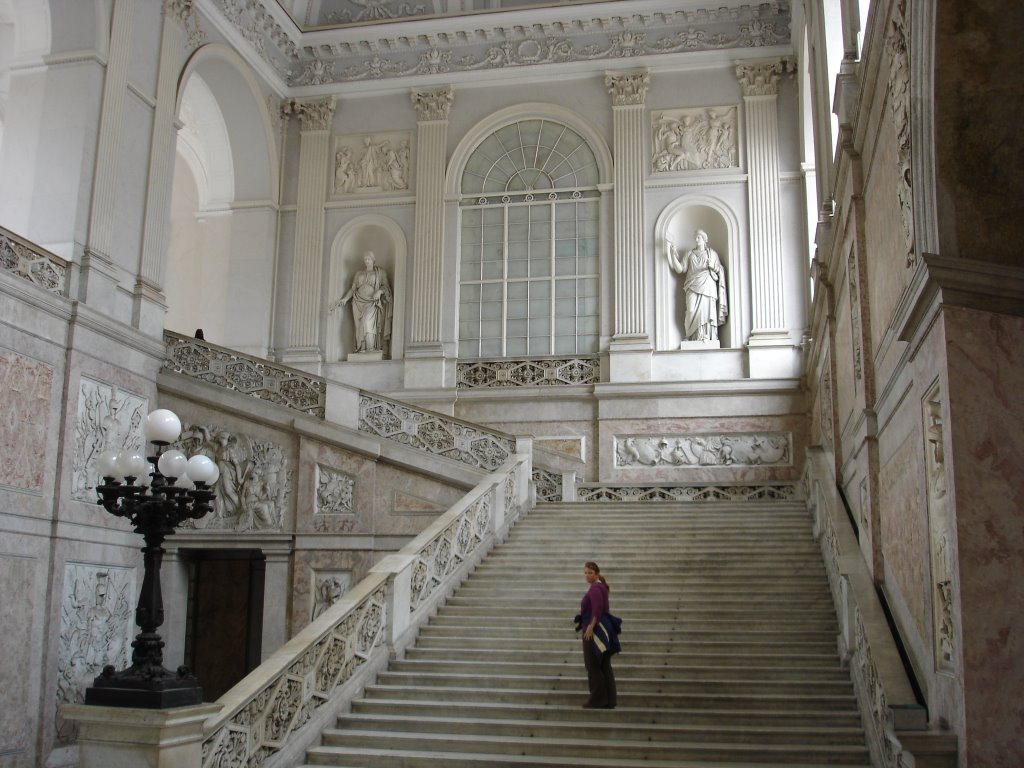
Piazza Reale - an opulent palace, which was curiously deserted when we looked through it. Was quite nice to have the run of the place - we could pretend it was ours.

Umberto Shopping Gallery - looks like something out of the film Metropolis, crossed with the Musee d'Orsay. This place is infamous for the attentions of its resident gypsy children. I had a cute lil tyke fixate on me at the entrance, but it was more like a fun game of 'tiggy' than anything to worry about. Awww.

09 May 2006

In the shadow of Mt Vesuvius


Holy moley, Pompeii is seriously huge. It's some 66 hectares of Roman city laid out in a large semi-rectangular shape, which was buried by the eruption of Mt Vesuvius in 79AD. Following the excavations, you can now walk around the largely preserved city and get a sense of what it was like to live in those, comparatively modern, times.

There are cobbled streets, with ruts formed by the chariot wheels. There are street hoardings, 'for rent' notices, graffiti and water fountains. There are small food shops that look like Asian fast food joints. You can walk into houses and see them almost as they were, with the invidual rooms complete with floor mosaics and painted walls. We explored public baths, patrician villas (large holiday homes outside the city walls), temples, the local government buildings, a brothel, necropoli (graveyards), theatre complexes (with atrium and galdiator's barracks) and the massive stadium and nearby exercise yard.

After many hours here, we caught a train to Herculaneum. This was more of a seaside resort and, thanks to the mud that filled it (Pompeii was hit by pumice rocks and ash), is even better preserved than Pompeii.

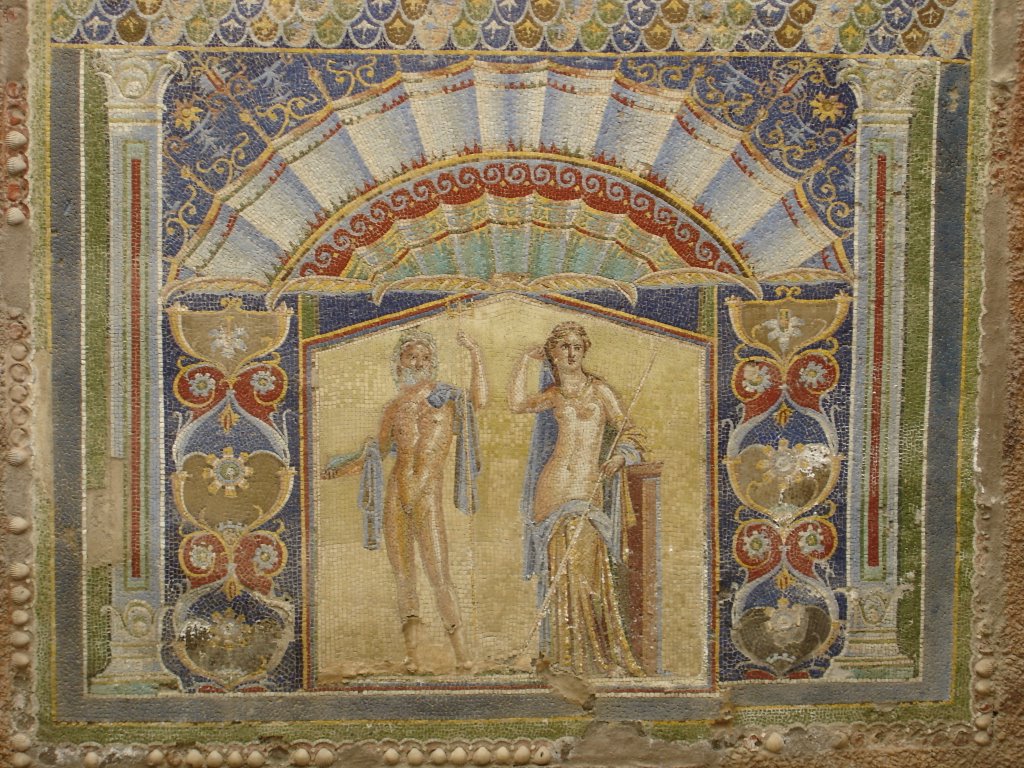
Herculaneum is set well below the street level of modern Ercolano (from all accounts, a bit of a slum). It is set in a massive recessed pit, which you reach either by tunnel or bridge. Here there are more complete mosaics in situ, and there are lovely gardens that have been replanted. It is a useful companion site to Pompeii - and if you only had a little time, would probably be a sufficient visit. Kind of like Pompeii's finest compressed into a small site, though it doesn't give the sense of scale.

A long day for us, so back to Naples for more exquisite pizza and beer!

08 May 2006

Napoli

Naples has a similar vibe to the Sicilian cities, but to the Nth degree - faster, noisier, more crowded. You can't take a few steps without hitting a motorbike, and every church has several resident beggars. These are usually a woman with a baby (maybe not always a real baby!), but as often as not, these might be ordinary looking, well-dressed people with their hands out. To date we've even seen a girl in new jeans with highlights in her hair, kneeling by the side of the road. Go figure!

Anna wanted me to mention that many of the streets are alleyways not even as wide as the pavements back home. There are scores of churches down each of these, many stories high with impressive monumental facades. Unfortunately you can't get back far enough from these to really take them in. Naples is actually very competitive when it comes to ornate interiors (I'm looking at you Gesu Nuovo cathedral!) but from outside these magnificent buildings look like they're crumbling away. There is also a lot of graffitti on them - can you imagine! Someone even had the nerve to spraypaint on the statue of Dante. Quite sad.

Anyway, we had a bit of an orienteering day:

Gesu Nuovo - 16th C baroque Jesuit church. Ornate overdrive!

S. Chiara - 14th C medieval church, restored following Allied bombings.

Piazza Dante - the eponymous author's statue and piazza square.

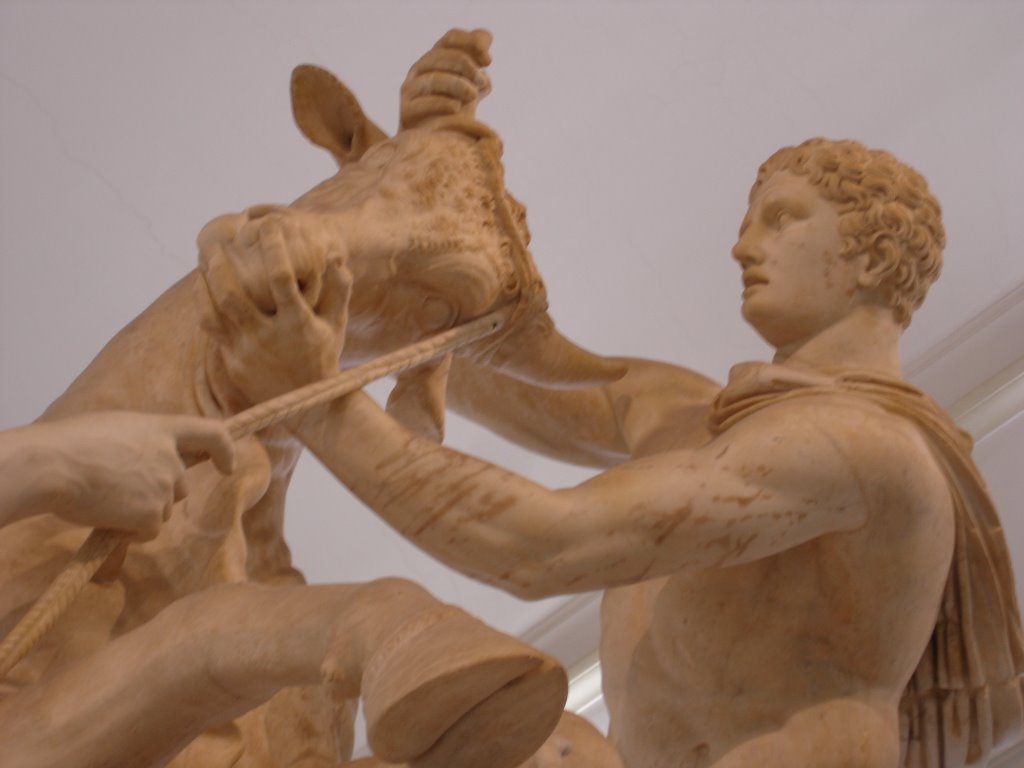
National Archaeological Museum - like a mini-Louvre, this museum is mostly famous for housing the treasure troves and mosaics/frescoes from Poempeii. Rightfully so, as these items are truly magnificent. The detail on the miniature mosaics is staggering, so fine as to appear like a painting. There are also many world-class Roman sculptures, such as many of the various emperors, but also giant figures from the Baths of Caracella in Rome. The greatest of these are the mammoth overwrought Hercules, and the multi-figured Farnese Bull. The latter depicts two men struggling with a large bull, as a woman cowers beneath. (In mythology, she is then tied to the underside of the bull to be killed. Grisly!)

NZ WATCH: an expat recognised our kiwi at the museum. She is now living in Australia (tsk tsk).

07 May 2006

Frank alive and well in Italy

It's either this, or an endless graffitti turf war between the fascists and the communists...

PS - there are a lot of new photos below. I have been able to replace 'borrowed' pictures with our own. Enjoy!

Train to Naples

Something always goes wrong on a long holiday, but sometimes things work out for the best. The night before our train ride from Palermo (Sicily) to Naples (mainland Italy), Anna pointed out that I had booked tickets for a day later by mistake! Determined to remain calm, I tried to phone the train station to arrange new tickets. As I'm sure you can guess, the phone messages were all in Italian - even the hotel concierge was stumped when I asked for his help.

Next I got on the internet to try making the changes online, only I now needed a login and password that I didn't have. I requested that a new password be emailed to me, but the email was taking a long time to arrive and the concierge was getting a bit annoyed by my hanging around the front desk (with no shoes on).

Eventually I got dressed to walk to the train station that night, but fortunately I prevailed on the concierge to let me check one more time - success! In the end, we managed to get tickets for an earlier train, which meant that we arrived in Naples at 4 in the afternoon, instead of at night. Lonely Planet suggests that "travellers should be careful about walking alone in the streets late at night, particularly near Stazione Centrale..." So you can see that things worked out for the best!

Anyway, to nervous mums and dads reading this - we are fine and happily ensconced in our safe hotel. We also have plenty of strategies for dealing with Naples' dodgy streetlife. From all accounts this is mostly just pushy beggars, so we will be carrying the minimum in the streets. For all the talk, Naples really is a lively little city. We've just had a couple of fantastic (and ginormous) pizzas, and will be seeing the treasure troves of Pompeii tomorrow at the archaeological museum. Not to be missed!

Sicily tour group


Just wanted to give a big shout out to our Sicilian tour group, a great bunch of people from Canada, China, Hungary and Italy. Extra big thanks to our fearless bus driver Antonio and our peerless guide, Giovanna (pictured here with Anna) who is now also our friend. We look forward to catching up in England, or on coming back to Sicily :)

06 May 2006

Sicilian gastronomie

We thought the food in Greece was terrific, but here in Sicily we are eating like kings! Each meal has several servings (all large) with lots of white wine. We have already stopped on tour for wine tastings, liquer tastings, honey tastings, oil tastings and cake tastings (yum).

Here's a summary of traditional Sicilian yums:

Liquers - Pistacchio, Almond, Cinammon (recommended), Prickly Pear, Lava (not recommended)

Sicilian sweets - Cassatelle (pastries filled with sweet ricotta) and frutta martorana (marzipan shaped like fruits, fish, anything really!)

Gelati - Cinammon, Cassata (ie. the ricotta pastries), Chocnut, Zuppa Inglese (supposed to taste like a lemon liquer cake), Pistacchio, Mandarin, Nutella, Amaretto, Green apple etc etc. Also popular are sorbetto (sorbets) and granita (flavoured ice, like sorbets)

Seltz - a yummy fizzy drink they make in little booths on the streets. Syrup with soda and fresh mandarin juice.

We also tried some Sicilian specialties - scacciata (spinach pastry), arancino (fried rice ball), coppa (dried meat), frittata (egg thing) and blood oranges.

Mike has a pot belly again.

Sicily Day 6

Today was a bit minor by comparison to the others. Spent the morning in Cefalu (another medieval town with a church and narrow streets) then drove back to our starting point in Palermo. Sicily feels big, but is actually quite small. The trip only took us about 3 hours all up.

Have just had an interesting afternoon wandering the streets of Palermo, looking for an internet place. We walked through alley after alley of markets with cheap clothing, pirated CDs/DVDs, meat and vegies and crappy merchandise. All very interesting - the closest thing back home is probably Saturday morning at Aotea Square.

Tomorrow we have a loooooong train ride to Naples. Yay!

Sicily Day 5 (Etna - Taormina)

Big morning up Mount Etna! We were told to wear a jacket in case it was cold. We assumed this was just because it might be a bit exposed up there - but ascending Etna is like ascending Ruapehu, only more like Dante's Inferno. Black craggy remains of lava flows, covered in a chilling creeping mist, with patches of grim looking snow here and there. Enough to freeze the balls off a brass monkey. Anna and I both got cold ears, but we were able to recover in a mountainside cafe. Anna had a nice hot chocolate, but I made the mistake of ordering Lava del'Etna, some kind of cheap nasty Etna-themed spirit. It is the worst thing I have ever had in my mouth. I think this vicious little beverage would be too much even for Aran! Luckily we stopped on the way down for a honey tasting session.

Avo in Taormina, another teeny town with narrow streets, traffic etc - only this time a little ritzier. Apparently film celebrities stay here, as it is quite picturesque. High mountains on one side, small harbour on the other. And... more ruins. Here we found a Roman theatre upon which a church had been built, partially covering the site. The theatre sticks out the back of the church, and there is also a small square inside the church from which the theatre is visible. Crazy.

Sicily Day 4 (Siracuse - Catania)

We went to the southern coast of Sicily to visit the town of Siracusa, which had a nice big greek theatre. This was also covered in scaffolding, as they were erecting wooden seats (covering the remains of the existing marble seats) for summer performances of classical Greek plays. It was very dazzling with the white seats and sand, even with sunglasses on! Nearby we also saw the remains of an ancient quarry, which has a natural fissure of about 60 (or more?) metres. This was used as a prison by one Greek tyrant, and acts as a natural amplifier so that he could eavesdrop. It was called the Ear of Dionysus by Caravaggio.

Spent the avo at Catania, next town over from our hotel. Another bunch of crowded little cobblestone streets with cars and motorbikes zipping about. Gets quite exhausting! But there are lots of sights to raise one's spirits, like the remains of a Roman theatre hidden in the middle of a motorcade! The city has been built on top of this, so only a little bit is visble - though it has tunnels disappearing under the city (now closed after a school tour group got lost in its labyrinthine depths!).

Also of interest in Catania is the elephant statue in the main square. This is made out of lava stone, found in abundance in this area thanks to nearby MOUNT ETNA! The still-active volcano is visible from lots of streets in Catania, and its volcanic rock is commonly used in construction. The elephant, for reasons I cannot remember, is a symbol of Catania. As long as the elephant is smiling, Catania will be safe from an eruption. I just hope Mother Nature pays attention to this little rule.

We also wandered through the extraordinary Pescheria - Catania's famous fish markets. Alleyways stuffed to the gills (excuse me) with fish, meat, cheese, vegetables and people. Watch out or you'll get splashed with guts by the ubiquitous butchers!

Sicily Day 3 (Agrigento - Caltagirone - Acireale)

Spent the morning at the Valley of Temples in Agrigento. This is a World Heritage Site, so its upkeep is paid by the whole of the EU. As with many of the sites here in Sicily, there is lots of scaffolding, so it's nice to know they're taking the restoration seriously. A bit of a shame for us though, as things are often closed or only partially visible. As the name indicates, this is another Greek settlement, with plenty of temples - some of which were later converted into churches.

Stopped by Caltagirone, famous for its ceramics. There is a long long stairway in the town, with ceramic tiles covering each riser. Very nice effect, but a hell of a thing to climb.

Best part of the day was the lunchtime stopover at a traditional Sicilian farm - now set up to cater to agricultural tourism. Lovely and sunny with beautiful flowers and orchards. We had a nice big feed (more on Sicilian food later) and I lay on some hay for a bit. Then I was itchy all afternoon. Oh well!

Overnight in the small town of Acireale, eastern Sicily near the coast.

Sicily Day 2 (Erice - Selinunte - Agrigento)

(Reposted from 1 May - was having internet issues!)

I am having a lot of fun typing this under the watchful eye of a grumpy Sicilian hotel owner. Free internet for guests, but 10 minutes only please! I must type quickly!

We left Palermo on our second tour day, and headed into the Trapani region, famous for its vineyards. There are monuments everywhere to the dissolution of the mafia - it still exists, but after a concentrated effort to prosecute it is now largely underground.

First stop was Erice, a hilltop medieval village with an ancient Greek origin. Narrow cobbled streets, castles, churches and fortifications. Very picturesque, with extraordinary views of the Egadi Islands.

The afternoon was spent at Selinunte, an enormous archaeological park with the ruins of several temples. Their dedications are unknown, so they are only labelled with letters of the alphabet. One has been partially restored, but this effort has been called off following the discovery of several mistakes in the restoration job. I had a lot of fun climbing all over the gargantuan ruins of the Zeus temple (they think they can identify this one because it's the BIGGEST!) Nerd note - this was the largest Greek settlement in Sicily, but was destroyed by the Carthaginians (who set up human sacrifices here! Yuck!) and earthquakes.

Overnight in Agrigento.

02 May 2006

Sicily!

We are now in Sicily, the small 'football' at the end of Italy, and have just begun our Terre de Sicilia tour. We spent our first day around Palermo, the capital city.

Cattedrale di Monreale - a fantastic church with a fusion of architectural styles: Norman, Arab, Byzantine and Classical. Sicily has been invaded and occupied many, many times, and this is evident everywhere you look. Here there are beautiful Christian mosaics and geometric Arab decoration.

Catacombe dei Capuccini - a bit grisly, this is a collection of mummified corpses of famous or rich Palermites from the last 400 years (including children).

Palazzo dei Normann - the Norman palace, now used for Sicilian parliament. A bit dull actually...

Teatro Massimo - a 19th Century opera house. The final bloodthirsty sequence of Godfather Part III was filmed here. Of course there is now a photo of me on the same steps :)

Santuario di Santa Rosalia - an old woman lived in a cave. Then she died. Then a shephard slept in the cave and dreamed of the old woman. Since then all sorts of miracles have been ascribed to her and she has been sanctified! The cave has now had a church built over it, and you can buy "holy water" that has condensed on the walls of the cave. The picture is not very good, but it shows the complex mechanisms that are attached to cave walls to catch the condensation and funnel it to a pool. I suspect it's mostly moisture from the people breathing in the cave. Yuck!

Mondello - beach resort. Had a nice gelato each.